Project Overview
The Reverse Engineering Project was a team-based engineering challenge where we were tasked with recreating a complex mechanical model in SolidWorks. The project required us to reverse-engineer every individual component, create engineering drawings, assemble all parts into a complete virtual model, and develop an animation showcasing how the system was assembled and how its mechanisms operated.
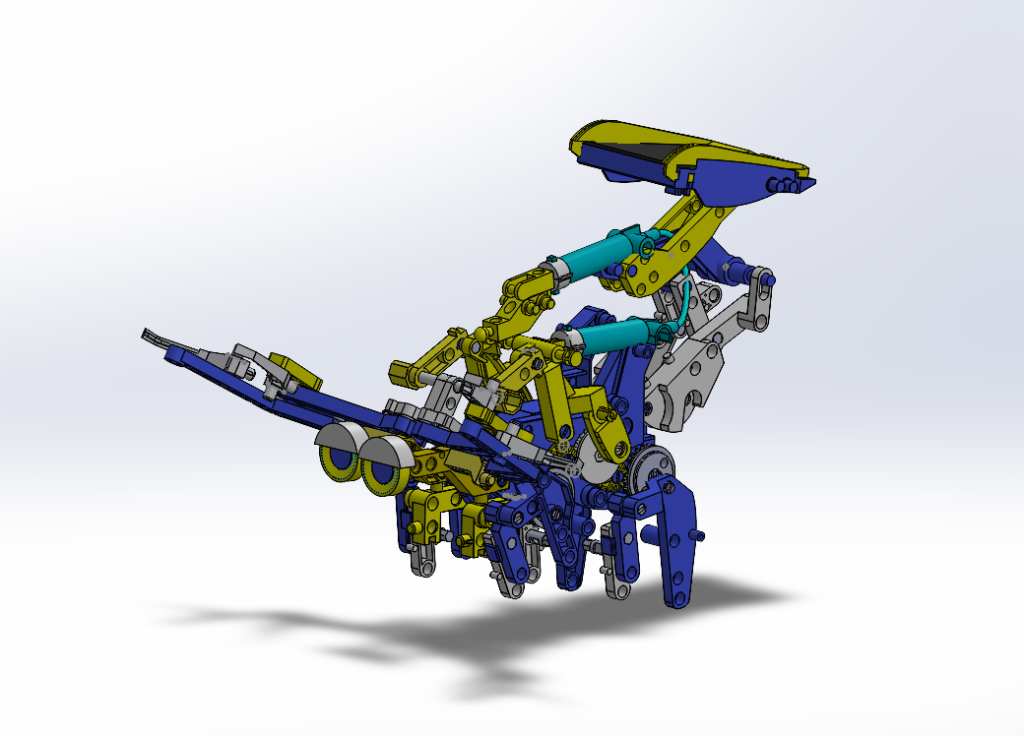
Our team chose to reverse-engineer a Scorpion model because of its complexity and large number of interconnected moving components. Every part had to be carefully studied and recreated before being integrated into the final assembly. The final result was a fully functional 143-part SolidWorks assembly that accurately reproduced the original model while demonstrating the capabilities of CAD modeling, assembly management, and reverse engineering.
My Role
As the project leader, I was responsible for organizing the team, assigning responsibilities, tracking progress, and making sure all project deliverables were completed on time. Throughout the semester, I regularly checked in with team members, helped solve design issues, and ensured everyone stayed on track to meet project deadlines.
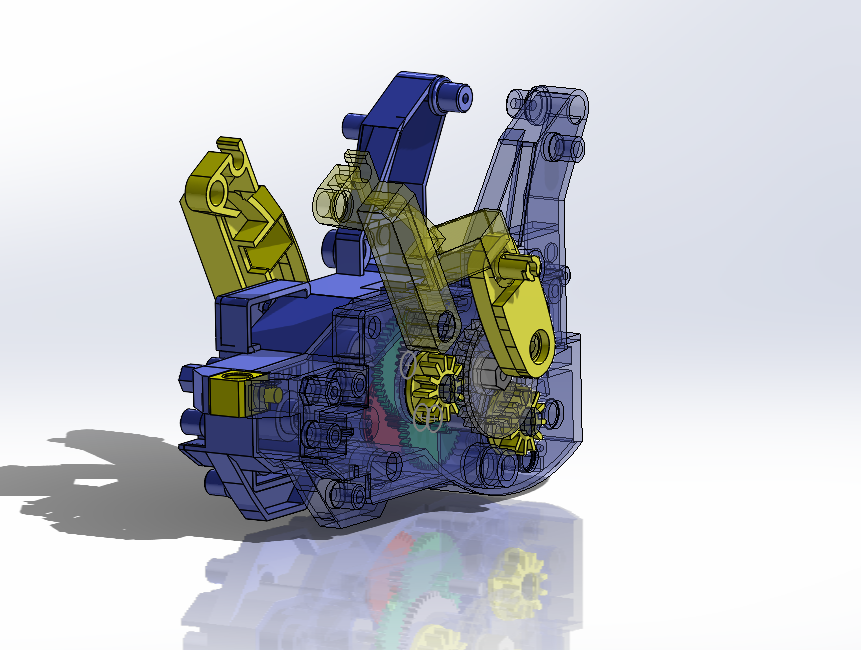
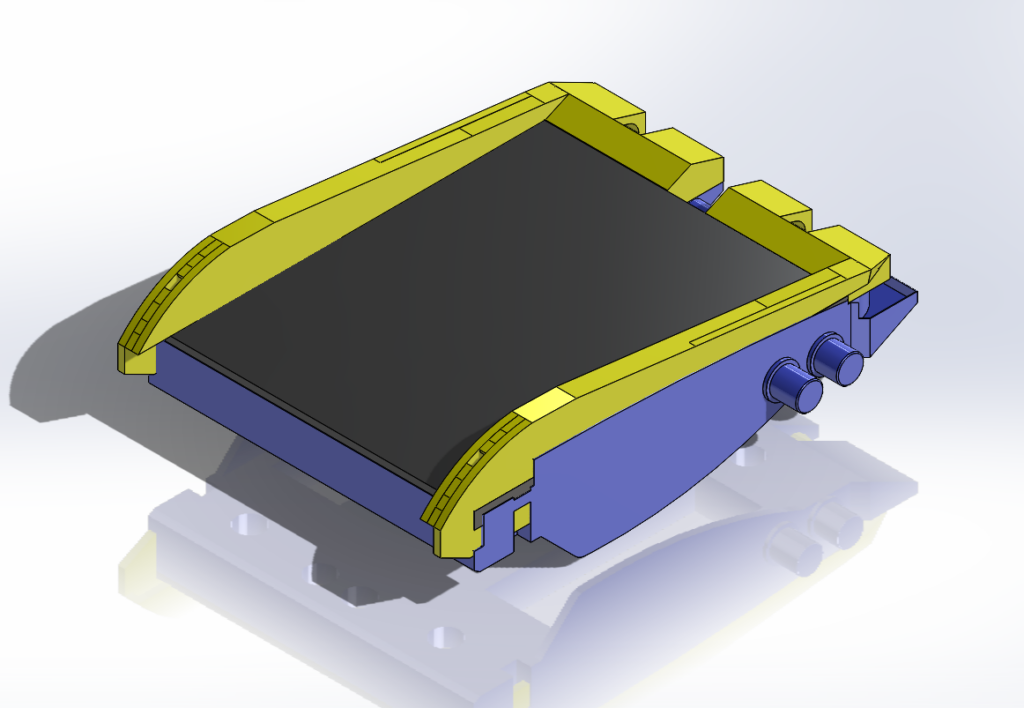
Alongside my leadership responsibilities, I reverse-engineered over 20 of the approximately 50 unique components used in the model. My main contributions included the gearbox assembly, hydraulic pump components, and several structural and mechanical parts of the Scorpion. Each part had to be carefully analyzed and recreated in SolidWorks to ensure it accurately matched the original design and fit properly within the final assembly.
In addition to creating my assigned components, I took responsibility for building the complete SolidWorks assembly, combining all team members’ parts into a fully functional 143-part model. I also created the final animation, which demonstrated both the assembly process and mechanical movement of the Scorpion. Throughout the project, I worked closely with my team to ensure milestones were met, deliverables were submitted on time, and the final product met the project’s requirements.
The Process
The project began with breaking down the Scorpion into individual components and distributing the work among team members. As project leader, I assigned a balanced mix of challenging and straightforward parts to each person to ensure the workload was fair while allowing everyone to contribute meaningfully to the final assembly. Before any modeling began, I created a tracking system and internal deadlines to monitor progress and ensure all components would be completed in time for assembly and animation development.
My primary responsibility was reverse engineering the gearbox components, hydraulic pump components, and various structural parts of the Scorpion. Using calipers and careful observation of the original model, I recreated each component in SolidWorks while ensuring dimensions, features, and assembly interfaces accurately matched the physical parts. In total, I reverse engineered over 20 components throughout the project.
As components were completed, I reviewed submissions from team members and verified that dimensions, geometry, and part features were modeled correctly. To keep the project organized, I categorized all components based on their function within the Scorpion, grouping parts into systems such as the body, legs, gearbox, hydraulic pump, and claw mechanisms. This organization made it easier to track progress, identify missing components, and streamline the assembly process.
To manage the complexity of a large assembly, I developed an organized workflow before beginning the final integration process. Rather than assembling all 143 components at once, I first created individual subassemblies for each major system, including the gearbox, hydraulic pump, legs, arms, body, and claw mechanisms. Each subassembly was independently assembled and tested to ensure proper fitment and motion before being integrated into the final model.
To further improve efficiency, I implemented a standardized file naming convention and folder structure for all parts and assemblies. This made it much easier to locate files, track completed work, and avoid wasting time searching for components as the project grew in size. Once all subassemblies were completed and verified, they were combined into the final assembly, creating a structured workflow that simplified the integration of all 143 components.
After all parts were collected, reviewed, and organized, I completed the final SolidWorks assembly. Integrating 143 individual components required careful attention to detail, as every mate, linkage, and moving mechanism needed to function correctly within the final model. Throughout the assembly process, I worked closely with team members to resolve design issues and ensure all components integrated properly.
Following the completion of the assembly, I developed a two-minute animation demonstrating both the assembly sequence and mechanical operation of the Scorpion. The animation showcased how the individual components came together while highlighting key mechanical movements, including the walking mechanism, claw operation, gearbox functionality, and hydraulic systems. The final result was a complete digital recreation of the Scorpion that accurately replicated the structure and motion of the original model.
Results
The project was a success and resulted in a fully functional 143-part SolidWorks assembly that accurately recreated the original Scorpion model. All components were successfully integrated into the final assembly, allowing the mechanical systems and moving parts to operate as intended within the virtual model.
The final deliverables included the completed assembly, engineering drawings, and a two-minute animation demonstrating both the assembly sequence and mechanical operation of the Scorpion. Despite the complexity of managing over 140 components, the final model came together successfully and accurately represented the structure and functionality of the original machine.
Overall, the project provided valuable experience in reverse engineering, CAD modeling, assembly development, project leadership, and managing large-scale SolidWorks assemblies while working within a team environment.